hello@sofrik.com
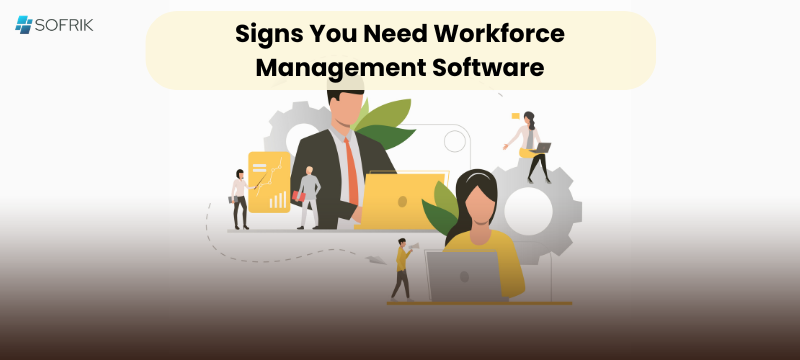
7 Signs Your Business Needs Workforce Management Software

sofrik
17 February 2026


Managing employees manually may work when your team is small. But as your business grows, spreadsheets, paper schedules, and disconnected tools create inefficiencies. If you constantly deal with scheduling conflicts, payroll errors, or rising labor costs, it may be time to evaluate whether you need workforce management software.
This guide explains seven clear signs your business is ready for a workforce management system and how the right solution improves operations.
What Is Workforce Management Software?
A workforce management system helps businesses manage:
- Employee scheduling
- Time and attendance tracking
- Leave management
- Labor forecasting
- Payroll integration
- Performance tracking
Modern WFM software automates repetitive HR tasks and gives managers real-time data to make informed decisions.
1. You’re Still Using Manual Scheduling
If you build schedules in Excel or on paper, you’re likely wasting time and increasing errors.
Manual scheduling leads to:
- Shift overlaps
- Understaffing or overstaffing
- Last-minute changes
- Employee confusion
A workforce management tool automates scheduling based on availability, skills, and demand forecasts. Managers can create optimized schedules in minutes instead of hours. If scheduling takes up too much time weekly, you likely need workforce management software to streamline operations.
2. Overtime Costs Are Increasing
Uncontrolled overtime is a major cost driver.
Without proper tracking, businesses often:
- Over-schedule certain employees
- Miss labor law compliance limits
- Approve unnecessary overtime
A WFM software for business provides visibility into labor hours in real time. Managers can monitor overtime before it becomes expensive. Data-driven scheduling helps control labor expenses while maintaining productivity.
3. Frequent Payroll Errors
Payroll mistakes damage employee trust.
Common issues include:
- Incorrect time tracking
- Missing clock-ins
- Manual calculation errors
- Delayed payments
A workforce management system integrates time tracking directly with payroll. This reduces human error and ensures accurate wage calculation. Employees are paid correctly and on time. HR teams spend less time fixing mistakes.
4. High Employee Turnover
Poor scheduling contributes to employee dissatisfaction.
Problems include:
- Inconsistent shifts
- Unfair distribution of hours
- No flexibility
- Poor communication
Modern workforce software allows:
- Shift swapping
- Transparent scheduling
- Self-service portals
- Better communication tools
When employees have more control and clarity, engagement improves. If your turnover rate is rising, implementing a WFM tool may help stabilize your workforce.
5. You Lack Real-Time Workforce Data
Many businesses make staffing decisions based on guesswork.
Without data, you can’t accurately answer:
- Are we overstaffed during slow periods?
- Are we understaffed during peak hours?
- Which departments are most productive?
A workforce management system provides analytics dashboards showing:
- Labor cost percentages
- Attendance patterns
- Productivity metrics
- Forecast accuracy
Data supports smarter decisions. If you rely on assumptions instead of metrics, you may need workforce management software to stay competitive.
6. Compliance Risks Are Increasing
Labor laws are complex and constantly changing.
Manual tracking increases risk of:
- Overtime violations
- Missed break requirements
- Record-keeping errors
- Penalties and fines
A WFM helps maintain compliance by:
- Automatically tracking hours
- Monitoring overtime thresholds
- Storing digital records
Compliance automation protects your business from costly legal risks.
7. Your Business Is Scaling Rapidly
Growth increases workforce complexity.
As your team expands:
- Scheduling becomes harder
- Communication gaps widen
- Administrative workload increases
- Errors multiply
Scaling businesses need centralized systems.
A workforce tool supports:
- Multi-location management
- Centralized data access
- Standardized scheduling processes
- Real-time visibility across teams
Additional Benefits of Workforce Management Systems
Beyond solving problems, a workforce management system provides long-term strategic advantages:
1. Improved Productivity
Optimized staffing ensures the right people are working at the right time.
2. Cost Control
Accurate forecasting reduces unnecessary labor spending.
3. Better Employee Experience
Transparent schedules improve morale and retention.
4. Time Savings for Managers
Automation reduces administrative workload.
When Should Small Businesses Consider WFM Software?
Some business owners assume workforce software is only for large enterprises.
In reality, small and medium businesses benefit significantly when:
- Employee count exceeds 15–20
- Shift-based work is involved
- Labor costs represent a major expense
- Scheduling takes more than 5 hours per week
Even small teams can see measurable ROI from automation.
How to Evaluate the Right Solution?
If you’ve identified multiple signs above, the next step is choosing the right system.
Look for:
- Easy integration with payroll
- Mobile access for employees
- Real-time reporting dashboards
- Scalability
- Strong data security
Request demos. Compare features. Calculate potential labor savings. A well-selected workforce management system pays for itself through improved efficiency and cost reduction.
Final Thoughts
Recognizing when you need workforce management software is crucial for long-term growth.
If your business experiences:
- Scheduling chaos
- Rising labor costs
- Payroll errors
- High turnover
- Lack of workforce visibility
- Compliance risks
- Rapid scaling challenges
It’s time to consider a workforce management tool designed to simplify operations. The right WFM software for business doesn’t just automate tasks. It empowers managers with data, improves employee satisfaction, and strengthens financial performance. Investing in modern workforce software is no longer optional for growing businesses. It’s a strategic move toward efficiency, compliance, and sustainable growth.